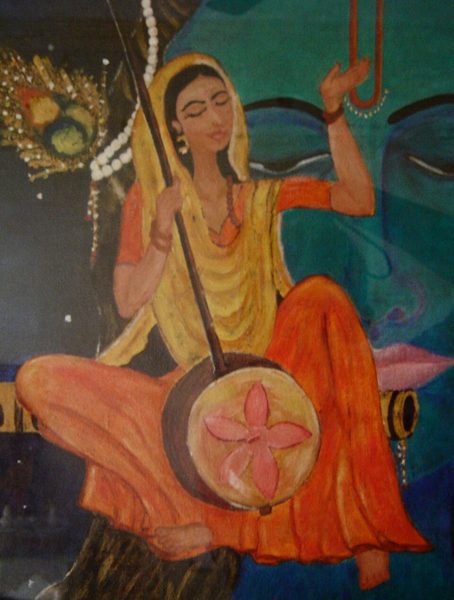
Mirabai
Meera , better known as Mirabai , [2] and venerated as Sant Meerabai , was a 16th-century Hindu mystic poet and devotee of Krishna. She is a celebrated Bhakti saint, particularly in the North Indian Hindu tradition. [3] [4] [5] She is mentioned in Bhaktamal , confirming that she was widely known and a cherished figure in the Bhakti movement by about 1600. [6] [7] In her poems, she expressed the madhurya bhava towards Krishna.
Spirituality and social reformEnglish
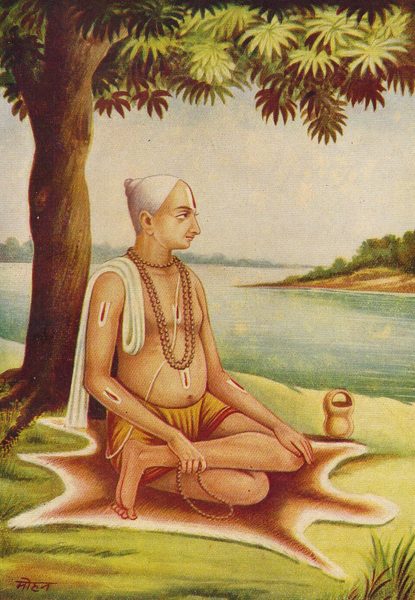
Tulsidas
Rambola Dubey (Hindi pronunciation: [rɑːməboːlɑː d̪ubeː]; 11 August 1511 – 30 July 1623 [1] ), popularly known as Goswami Tulsīdās (Sanskrit pronunciation: [tʊlsiːdaːsa]), [2] was a Vaishnava (Ramanandi) Hindu saint, devotee (भक्त) and poet, renowned for his devotion to the deity Rama. He wrote several popular works in Sanskrit, Awadhi, and Braj Bhasha, but is best known as the author of the Hanuman Chalisa and of the epic Ramcharitmanas , a retelling of the Sanskrit Ramayana , based on Rama's life, in the vernacular Awadhi language.
Spirituality and social reformEnglish
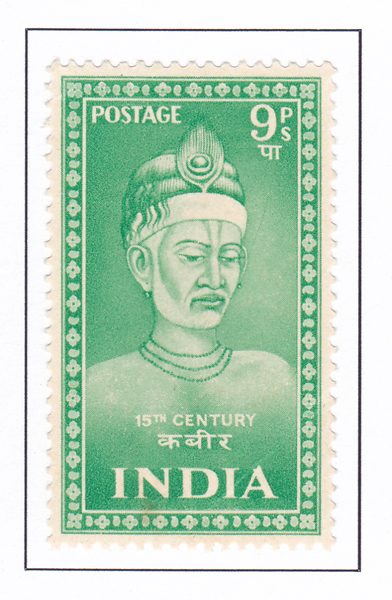
Kabir
Kabir (fl. 15th century) [1] : 14–15 was a famous Indian devotional mystic poet and saint. His writings influenced Hinduism's Bhakti movement, and his verses are found in Sikhism's scripture Guru Granth Sahib, the Satguru Granth Sahib of Saint Garib Das, [2] and Kabir Sagar of Dharamdas. [3] [4] [5] Today, Kabir is an important personality in Hinduism, Sikhism and in Sufism. [6] He was a disciple of Ramananda, the founder of the Ramanandi Sampradaya.
Spirituality and social reformEnglish
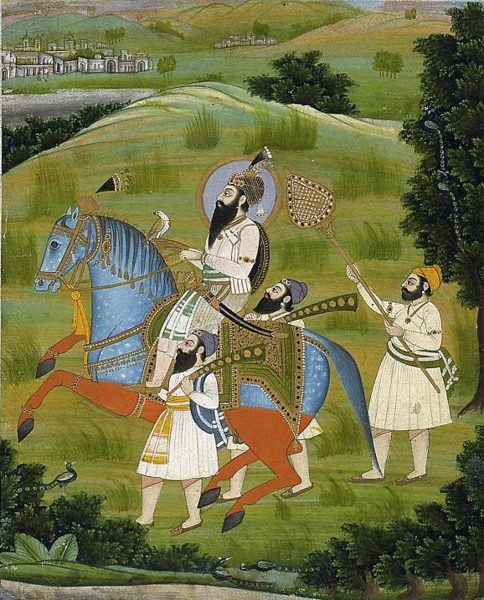
Guru Gobind Singh
Guru Gobind Singh (Punjabi pronunciation: [gʊɾuː goːbɪn̪d̪ᵊ sɪ́ŋgᵊ]; born Gobind Das ; [1] 22 December 1666 – 7 October 1708) [2] [5] [24] was the tenth and last human Sikh Guru. [25] [3] He was a warrior, poet, and philosopher. In 1675, at the age of nine, he was formally made the leader of the Sikhs after his father Guru Tegh Bahadur—the ninth Sikh Guru—was executed by the emperor Aurangzeb. [25] [4] His four biological sons died during his lifetime—two in battle and two executed by the Mughal administrator Wazir Khan. [31] [32] [33]
Spirituality and social reformEnglish
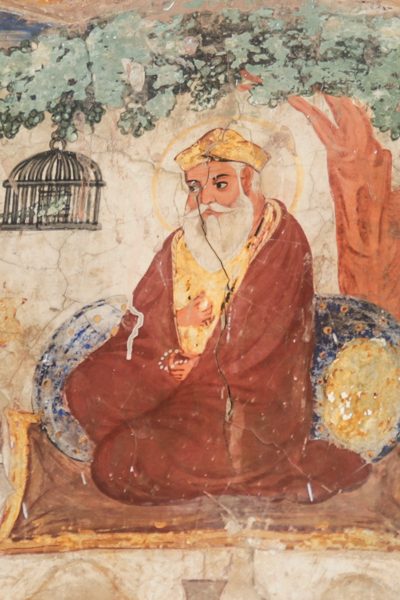
Guru Nanak
Gurū Nānak (15 April 1469 – 22 September 1539; Gurmukhi: ਗੁਰੂ ਨਾਨਕ [1] ), also known as Bābā Nānak (Father Nanak), [22] was an Indian spiritual teacher, mystic and poet, who is regarded as the founder of Sikhism and is the first of the ten Sikh gurus.
Spirituality and social reformEnglish
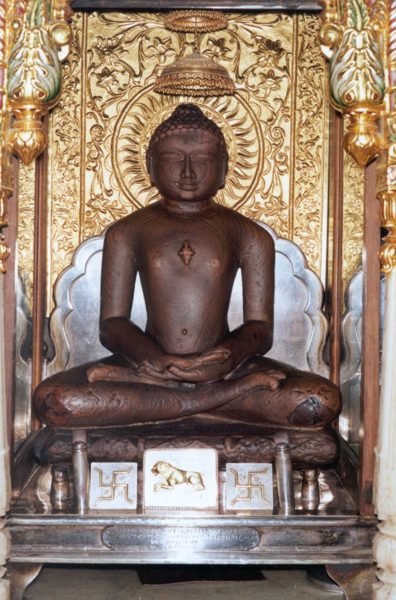
Mahavira
Mahavira ( Mahāvīra ), also known by his birth name Vardhamana ( Vardhamāna ), was an Indian religious reformer and spiritual leader, considered by Jains to be the 24th and final Tirthankara (Supreme Preacher) in the current time cycle of Jain cosmology. He is believed by historians to have lived in the 6th or 5th century BCE, [32] [17] [1] reviving and reforming an earlier Jain or proto-Jain community [3] which had likely been led by Pārśvanātha, whom Jains consider to be Mahavira's predecessor. [33] [34] [35] Although the dates of Mahavira's life are uncertain and historically reliable in…
Spirituality and social reformEnglish
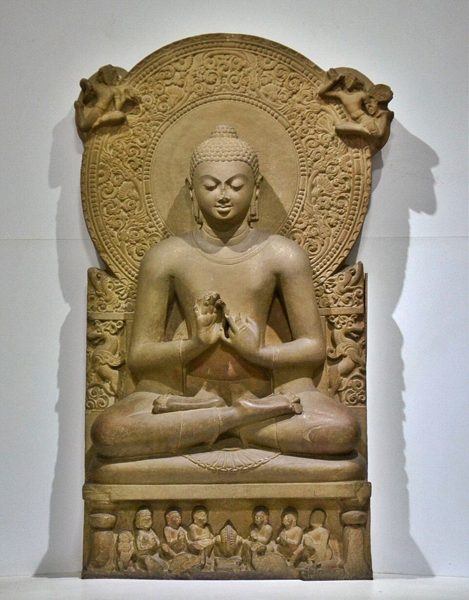
The Buddha
Siddhartha Gautama , [5] most commonly referred to as the Buddha (lit. 'the awakened one'), [50] [6] [7] was a wandering religious teacher who lived in the eastern Indo-Gangetic Plains during the 6th or 5th century BCE [51] [52] [53] [2] and founded Buddhism. According to Buddhist legends, he was born in Lumbini, in what is now Nepal, [3] to royal parents of the Shakya clan, but renounced his home life to live as a wandering ascetic. [54] [8] After leading a life of mendicancy, asceticism, and meditation, he attained nirvana at Bodh Gaya in what is now Bihar, India. The Buddha then wandered…
Spirituality and social reformEnglish
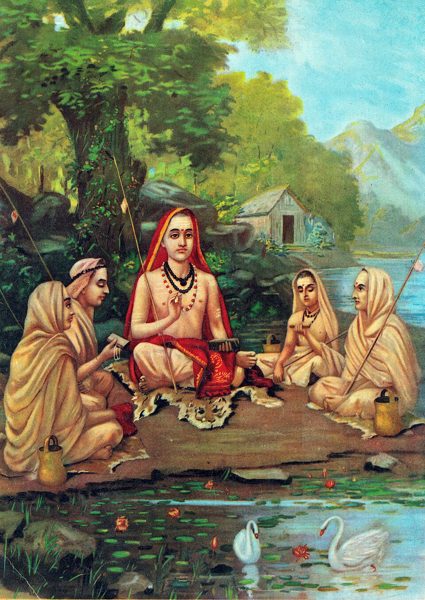
Adi Shankara
Adi Shankara (8th c. CE), [1] also called Adi Shankaracharya (Sanskrit: आदि शङ्कर, आदि शङ्कराचार्य, romanized: Ādi Śaṅkara, Ādi Śaṅkarācārya , lit. 'First Shankara', [2] pronounced [aːd̪i ɕɐŋkɐraːt͡ɕaːrjɐ]), [3] was an Indian Vedic scholar-monk, philosopher, and teacher ( acharya ) of Advaita Vedanta. [44] He wrote influential commentaries on the Brahma sutras and other texts, and in recent times is often revered as the most important Indian philosopher. [45] Reliable information on Shankara's actual life is scant, [46] and the historical influence of his works on Hindu intellectual thought…
Spirituality and social reformEnglish
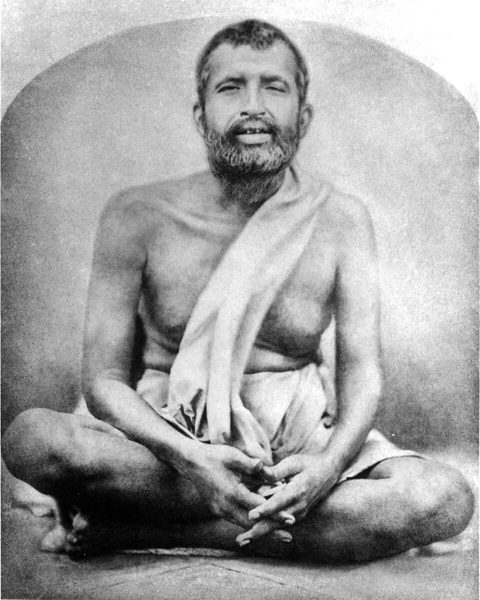
Ramakrishna
Ramakrishna (18 February 1836 – 16 August 1886 [9] ), also called Ramakrishna Paramahamsa (pronounced [ramɔkriʂno pɔromoɦɔŋʃo] ⓘ ; IAST: Rāmakṛṣṇa Paramahaṃsa ), born Ramakrishna Chattopadhyay (his childhood nickname was Gadadhar ), [10] [11] [12] was an Indian Hindu mystic. He was a devotee of the goddess Kali, but adhered to various religious practices from the Hindu traditions of Vaishnavism, Tantric Shaktism, and Advaita Vedanta, as well as Christianity and Sufi Islam. His parable-based teachings advocated the essential unity of religions and proclaimed that world religions are "so many…
Spirituality and social reformEnglish
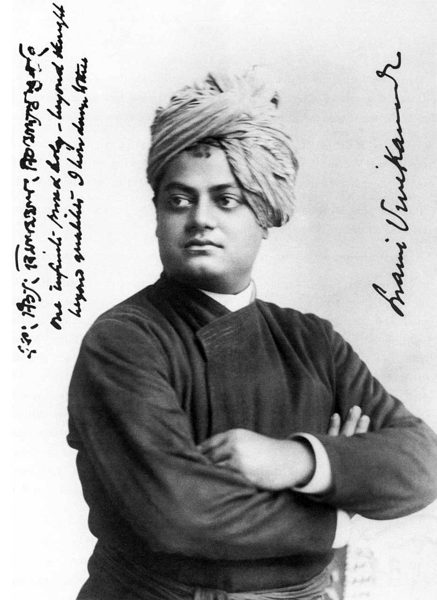
Swami Vivekananda
"Arise, awake, and stop not till the goal is reached" ( more on Wikiquote)
Spirituality and social reformEnglish
Birsa Munda
Birsa Munda pronunciation ⓘ (15 November 1875 – 9 June 1900) [4] was an Indian tribal independence activist, and folk hero who belonged to the Munda tribe. He spearheaded a tribal religious millenarian movement that arose in the Bengal Presidency (now Jharkhand) in the late 19th century, during the British Raj, thereby making him an important figure in the history of the Indian independence movement. [5] The revolt mainly concentrated in the Munda belt of Khunti, Tamar, , Sarwada and Bandgaon. [6]
Historical personalitiesEnglish
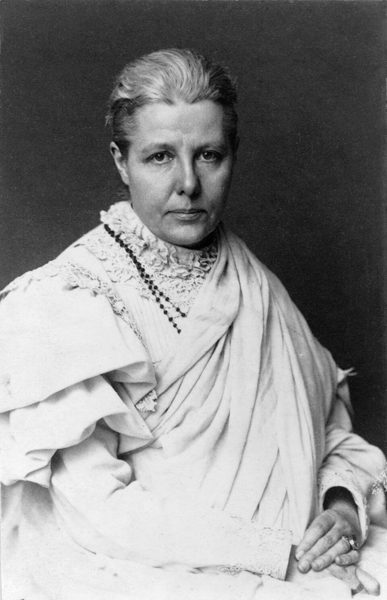
Annie Besant
Annie Besant (/ˈbɛzənt/; [1] née Wood ; 1 October 1847 – 20 September 1933) was an English socialist, theosophist, freemason, educationist, and activist involved in women's rights, Home Rule, and Indian nationalism. [2] [3] [4] She supported Irish and Indian self-rule. [2] She became the first female president of the Indian National Congress in 1917.
Historical personalitiesEnglish
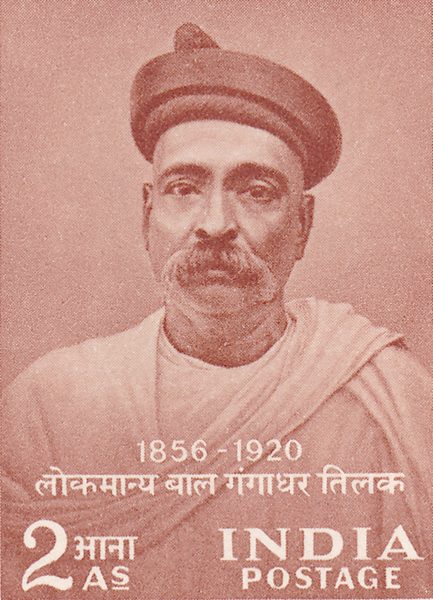
Bal Gangadhar Tilak
Bal Gangadhar Tilak [1] (born Keshav Gangadhar Tilak [12] [13] (pronunciation: [keʃəʋ ɡəŋɡaːd̪ʱəɾ ʈiɭək]); 23 July 1856 – 1 August 1920), was an Indian nationalist and self-rule activist in the Indian independence movement. He was one third of the Lal Bal Pal triumvirate. [14] The honorific "Lokmanya" (meaning "accepted by the people as their leader") was applied to him by his supporters. [15]
Historical personalitiesEnglish
Ram Prasad Bismil
Ram Prasad Bismil (11 June 1897 – 19 December 1927) was an Indian poet, writer, and revolutionary who fought against British Raj, participating in the Mainpuri Conspiracy of 1918, and the Kakori Conspiracy of 1925. He composed in Urdu and Hindi under pen names Ram , Agyat (anonymous) and Bismil (wounded), becoming widely known under the latter. "Bismil" was not his real surname; it was his pen name. Pandit was an honorific title rather than a family surname conferred to him due to his specialised knowledge on several subjects. He was also a translator.
Historical personalitiesEnglish
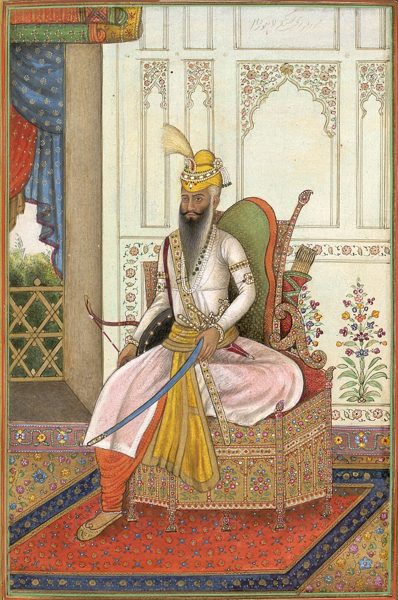
Ranjit Singh
Ranjit Singh [1] (Punjabi pronunciation: [ɾəɳd͡ʒiːt̪(ə̆) sɪ˩˥ŋɡ]; c. 13 November 1780 – 27 June 1839) was the founder and the first maharaja of the Sikh Empire, ruling from 1801 until his death in 1839. Starting as a local chieftain, by the time of his death he had expanded his kingdom from Ladakh in the north to the borders of Sindh, and from Khyber Pass in the west to the river Sutlej in the east.
Historical personalitiesEnglish
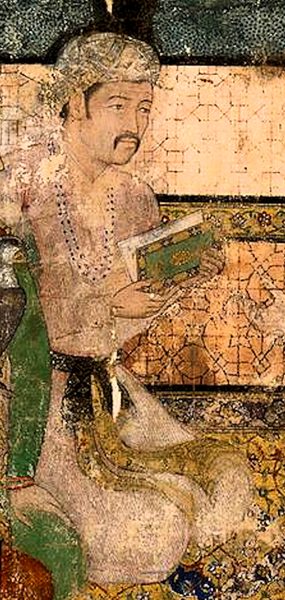
Akbar
Akbar [2] (Jalal-ud-Din Muhammad Akbar, [11] (1542-10-15)15 October 1542 [1] – (1605-10-27)27 October 1605), [15] also known as Akbar the Great , [16] was the third Mughal emperor, who reigned from 1556 to 1605. Akbar succeeded his father, Humayun, under a regent, Bairam Khan, who helped the young emperor expand and consolidate Mughal domains in the Indian subcontinent. He is generally considered one of the greatest Mughal emperors. [17]
Historical personalitiesEnglish
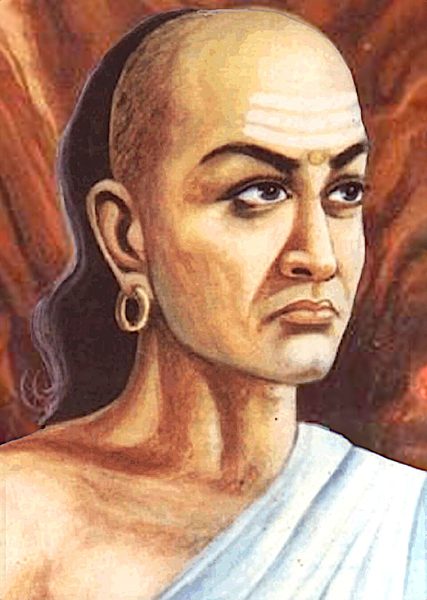
Chanakya
Chanakya (ISO: Cāṇakya , चाणक्य, pronunciation ⓘ ), according to legendary narratives [1] preserved in various traditions dating from the 4th to 11th century CE, was a Brahmin who assisted the first Mauryan emperor Chandragupta in his rise to power and the establishment of the Maurya Empire. According to these narratives, Chanakya served as the chief adviser and prime minister to both emperors Chandragupta Maurya and his son Bindusara. [8]
Historical personalitiesEnglish
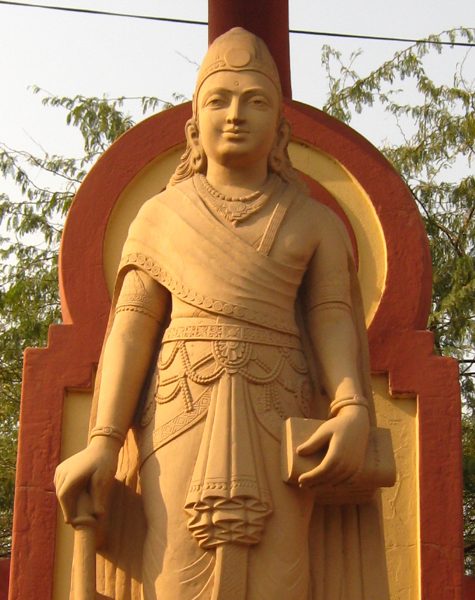
Chandragupta Maurya
Chandragupta Maurya [4] (reigned c. 320 BCE [5] – c. 298 BCE) [6] was the founder and the first emperor of the Maurya Empire, based in Magadha (present-day Bihar) in the Indian subcontinent.
Historical personalitiesEnglish
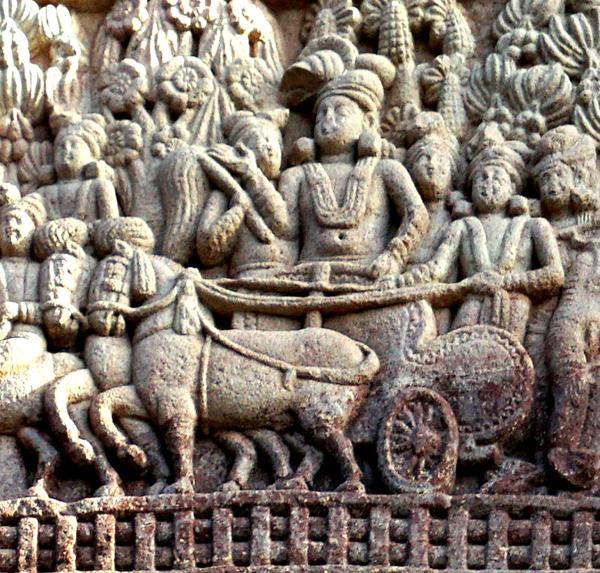
Ashoka
Ashoka , also known as Asoka or Aśoka (/əˈʃoʊkə/ [8] ə-SHOH-kə ; Sanskrit: [ɐˈɕoːkɐ], IAST: Aśoka ; c. 304 – 232 BCE), most commonly known as Ashoka the Great , was Emperor of Magadha [9] from c. 268 BCE until his death, and the third ruler of the Maurya Empire. His empire covered a large part of the Indian subcontinent, stretching from present-day Afghanistan in the west to present-day Bangladesh in the east, with its capital at Pataliputra. A patron of Buddhism, he is credited with an important role in the spread of Buddhism across ancient Asia.
Historical personalitiesEnglish
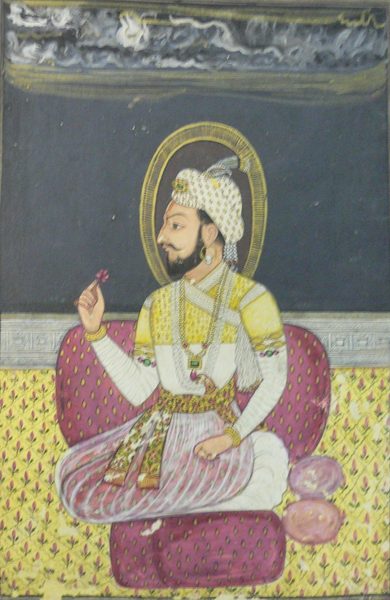
Sambhaji
Sambhaji (Sambhajiraje Shivajiraje Bhonsle, Marathi pronunciation: [saːmˈbʱaːdʑiː ˈbʱos(ə)le]; 14 May 1657 – 11 March 1689), also known as Shambhuraje , ruled from 1681 to 1689 as the second king (Chhatrapati) of the Maratha Empire, a prominent state in early modern India. He was the eldest son of Shivaji, the founder of the Maratha Empire.
Historical personalitiesEnglish