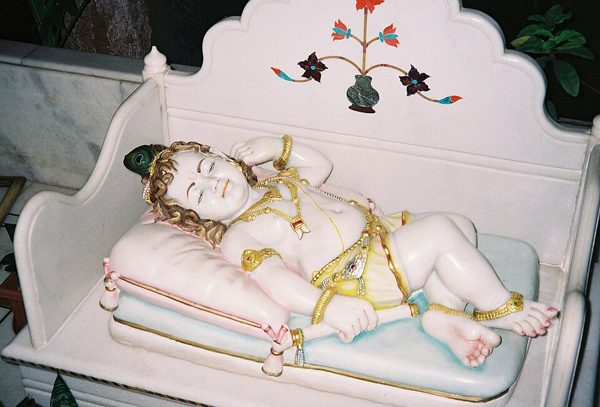
Krishna Janmashtami
Krishna Janmashtami (Sanskrit: कृष्णजन्माष्टमी, romanized: Kṛṣṇajanmāṣṭamī ), also known as Krishnashtami , Janmashtami , or Gokulashtami , is an annual Hindu festival that celebrates the birth of Krishna, the eighth avatar of Vishnu. In prominent Hindu scriptures, such as the Mahabharata , Bhagavata Purana and Gita Govinda , Krishna has been identified as the supreme God and the source of all avatars. [5] Krishna's birth is celebrated on the eighth day (Ashtami) of the dark fortnight (Krishna Paksha) in Shravana Masa (according to the amanta tradition) or Bhadrapada Masa (according to the …
Festivals and eventsEnglish
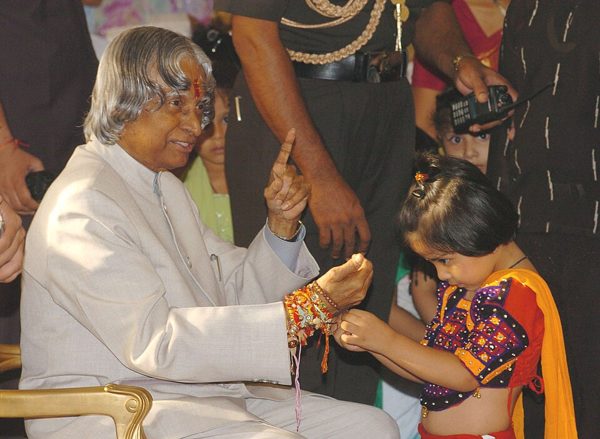
Raksha Bandhan
"Mayer's (1960: 219) observation for central India would not be inaccurate for most communities in the subcontinent:
Festivals and eventsEnglish
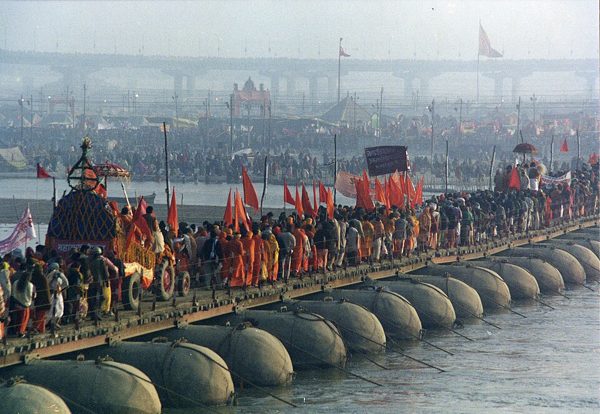
Kumbh Mela
Kumbh Mela (Sanskrit: Kumbha Mēlā , pronounced [kʊˈmbʱᵊ melaː]; lit. 'festival of the Sacred Pitcher' [15] ) is a Hindu pilgrimage, celebrated every four or twelve years, correlated with the partial or full revolution of Jupiter. These are held at four locations–Prayagraj, Haridwar, Nashik, and Ujjain– at varying time intervals. According to the Puranas , these sites are believed to have received drops of the divine nectar ( amrita ) during the Samudra Manthana (churning of the ocean of milk). [16] [17] [18] The Kumbh Mela lasts between one and three months, [19] [20] with the Amavasya day …
Festivals and eventsEnglish
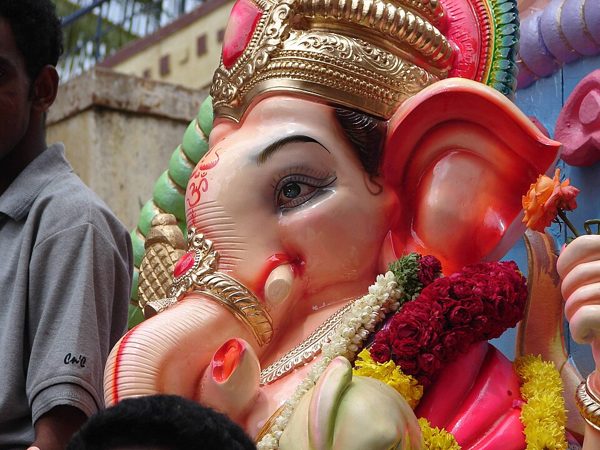
Ganesh Chaturthi
Ganesh Chaturthi (ISO: Gaṇeśa Caturthī ) (transl. Festival of Ganesha on the Fourth Day ), also known as Vinayaka Chavithi ( Vināyaka Cavithī ), or Vinayagar Chaturthi ( Vināyagar Caturthī ), is a Hindu festival celebrating the arrival of the Hindu deity Ganesha to the south of India to meet his brother Karthikeya. [3] The festival is marked with the installation of Ganesha's murtis (devotional representations of a deity), privately in homes and publicly on elaborate pandals (temporary stages). Observances include chanting of Vedic hymns and Hindu texts, such as prayers and vrata (fasting).…
Festivals and eventsEnglish
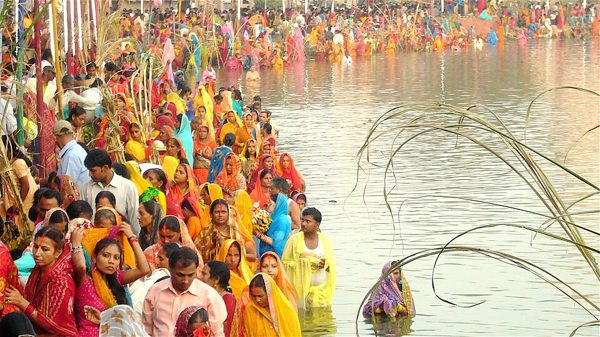
Chhath
Chhath , also called Chhath Puja , is an ancient Hindu festival native to East India and southern Nepal. [1] It is celebrated [2] primarily in the Indian state of Bihar, Jharkhand, and eastern Uttar Pradesh; [3] [4] and Koshi, Gandaki, Bagmati, Lumbini, and Madhesh provinces of Nepal. [5] [6] [7] [8] In major urban centres like Delhi, Mumbai, Kolkata, Janakpur, and Kathmandu, the diaspora celebrates Chhath to preserve their cultural heritage. [9] [10] [11] [12] The festival is also celebrated by the diaspora [13] [14] in countries such as the United States, Australia, Singapore, Malaysia, t…
Festivals and eventsEnglish
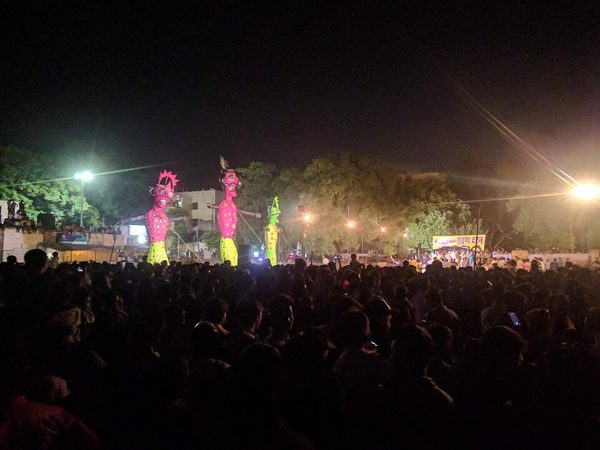
Vijayadashami
Vijayadashami (Sanskrit: विजयादशमी, romanized: Vijayādaśamī , lit. 'Tenth day of victory'), more commonly known as Dasara , or Dassahra , or Dussehra , [1] and also known as Dashāhra or Dashain in Nepali, is a major Hindu festival celebrated every year at the end of Durga Puja and Navaratri. It is observed on the tenth day of the waxing moon (Shukla Paksha) in the month of Ashvin, the seventh in the Hindu lunisolar calendar, and falls in the Gregorian calendar months of September or October. [4] [5] [6]
Festivals and eventsEnglish
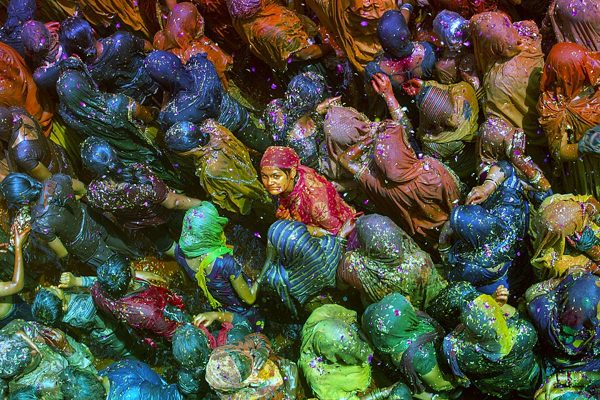
Holi
Holi (IPA: ['hoːli:, hoːɭiː]) is a major Hindu festival [7] [8] of colours, love and spring. [2] [9] [10] [11] It celebrates the love between the deities Radha and Krishna. [12] [13] Additionally, the day signifies the triumph of good over evil, [14] [15] as it commemorates the victory of Vishnu as Narasimha over Hiranyakashipu. [16] [17] Holi originated in ancient Indian subcontinent and is predominantly celebrated in the Indian subcontinent, but has also spread to other regions of Asia and parts of the Western world. [10] [18] [19]
Festivals and eventsEnglish
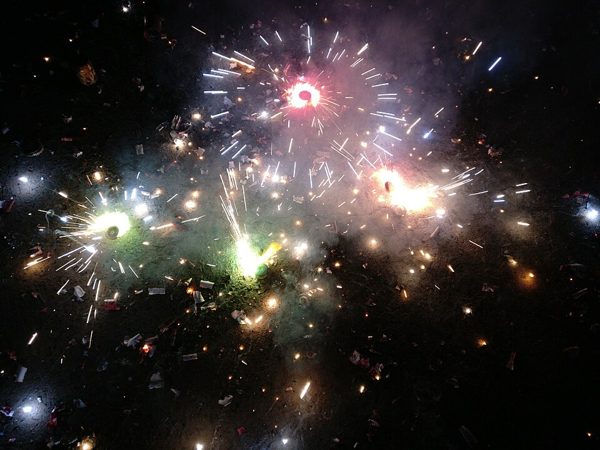
Diwali
Dipavali (IAST: Dīpāvalī ), [1] commonly known as Diwali (/dɪˈwɑːliː/), [26] is the Hindu festival of lights, with variations celebrated in other Indian religions such as Jainism and Sikhism. [2] It is associated with the spiritual victory or triumph of Dharma over Adharma , light over darkness, good over evil, and knowledge over ignorance. [27] [28] [29] [30] Diwali is celebrated during the Hindu lunisolar months of Ashvin (according to the amanta tradition) and Kārtika – between around mid-October and mid-November. [36] The celebrations generally last five or six days. [37] [38]
Festivals and eventsEnglish
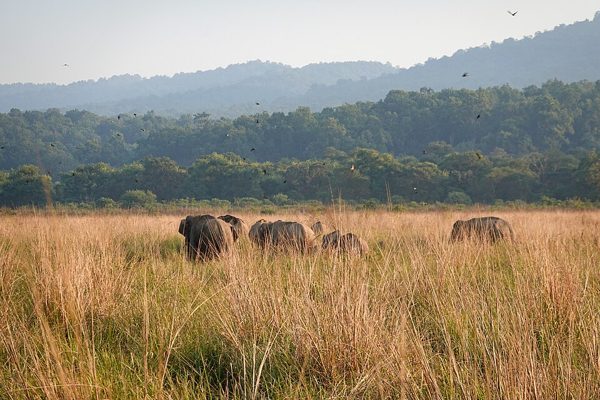
Jim Corbett National Park
Jim Corbett National Park is a national park in the Nainital district of the state of Uttarakhand, India. It was established in 1936 as the country's first national park and is named in honour of Jim Corbett, who had played a leading role in its establishment. It was the first to come under the Project Tiger initiative and encompasses an area of 520.8 km 2 (201.1 sq mi) consisting of hills, riverine belts, marshy depressions, grasslands and a large lake at an elevation range of 400–1,220 m (1,300–4,000 ft). It receives rainfall from July to September. Almost 73% of the national park is cove…
Nature and wildlifeEnglish
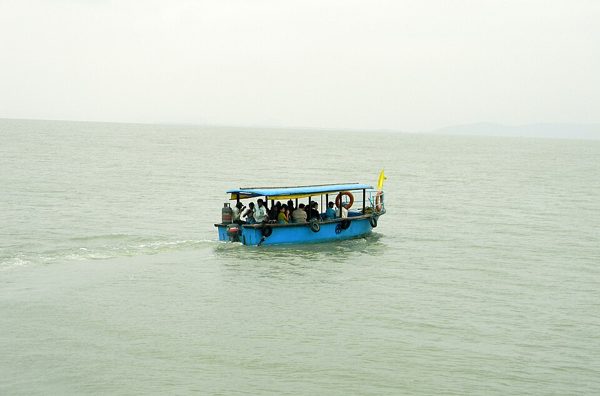
Chilika Lake
Chilika Lake is the largest brackish water lagoon with estuarine characteristics along the east coast of Indian sub-continent in Asia [4] and second largest coastal lagoon in the world, [5] its area ranges from about 900 to 11,165 sq km during summers and monsoon respectively. [6] [7] [8] [9] It is spread over the Puri, Khordha and Ganjam districts of Odisha state on the east coast of India, at the mouth of the Daya River, flowing into the Bay of Bengal.
Nature and wildlifeEnglish
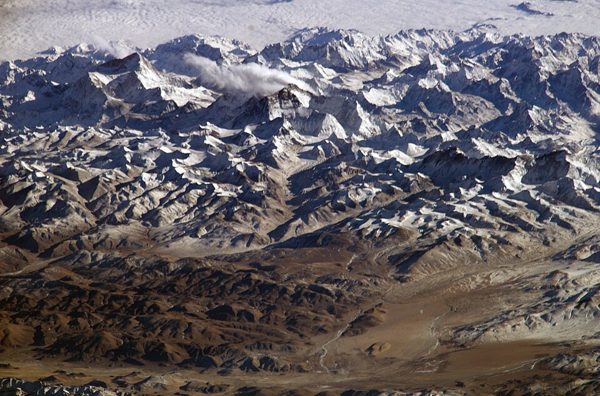
Himalayas
The Himalayas , [2] or Himalaya , [3] is a mountain range in Asia separating the plains of the Indian subcontinent from the Tibetan Plateau. The range has some of the highest peaks on Earth, including the highest, Mount Everest. More than 100 peaks exceeding elevations of 7,200 metres (23,600 feet) above sea level lie in the Himalayas.
Nature and wildlifeEnglish
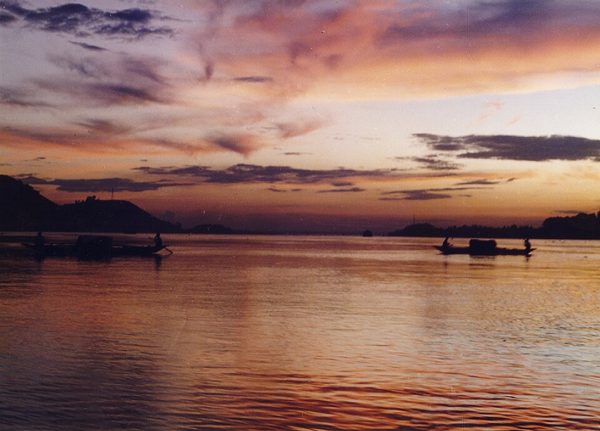
Brahmaputra River
The Brahmaputra (Assamese: [ˈbɹɔɦ.mɔ.put.ɹɔ]) is a trans-boundary river which flows through Southwestern China, Northeastern India, and Bangladesh. It is known as the Brahmaputra in Assam, Yarlung Tsangpo in Tibetan, the Siang/Dihang River in the Mishmi language, and Jamuna River in Bangladesh. By itself, it is the 9th largest river in the world by discharge, and the 15th longest.
Nature and wildlifeEnglish
Yamuna
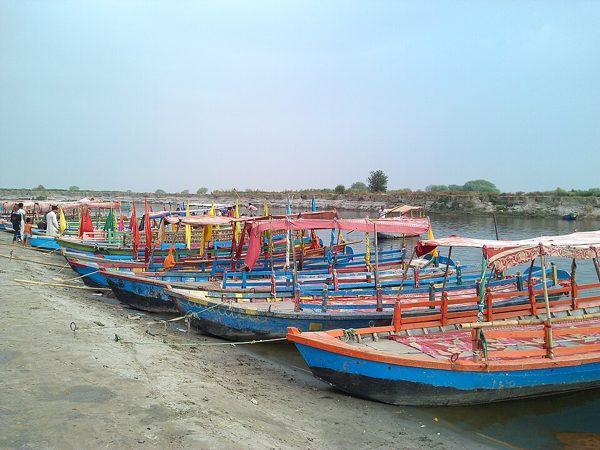
The Yamuna (pronounced [jəmʊnɑː]; IAST: Yamunā ) is the second-largest tributary river of the Ganges by discharge and the longest tributary in India. Originating from the Yamunotri Glacier at a height of about 4,500 m (14,800 ft) [2] on the southwestern slopes of Bandarpunch peaks of the Lower Himalaya in Uttarakhand. It then enters Himachal Pradesh before following in to the Indo-Gangetic plains of Uttar Pradesh and Haryana. It travels 1,376 kilometres (855 mi) and drains an area of 366,223 square kilometres (141,399 mi 2 ), 40.2% of the entire Ganges Basin. It merges with the Ganges at Tr…
Nature and wildlifeEnglish
Ganges
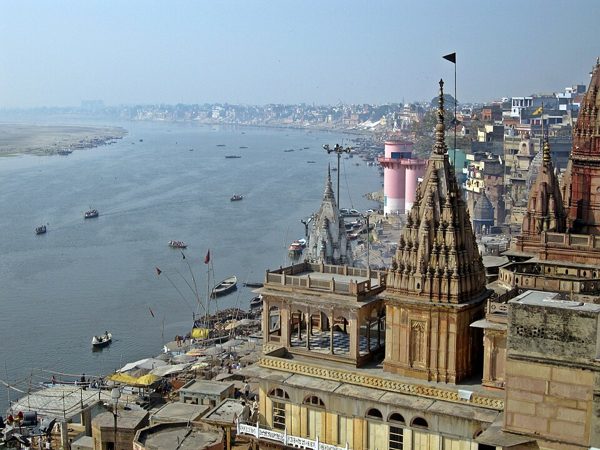
The Ganges [1] (in India: Ganga ; [2] in Bangladesh: Padma [3] [4] ) is a trans-boundary river of Asia which flows through India and Bangladesh. The 2,525-kilometre-long (1,569 mi) river rises in the western Himalayas in the Indian state of Uttarakhand. It flows south and east through the Gangetic plain of North India, receiving the right-bank tributary, the Yamuna, which also rises in the western Indian Himalayas, and several left-bank tributaries from Nepal that account for the bulk of its flow. [25] [26] [27] In West Bengal, India, a feeder canal taking off from its right bank diverts ha…
Nature and wildlifeEnglish
Gulmarg
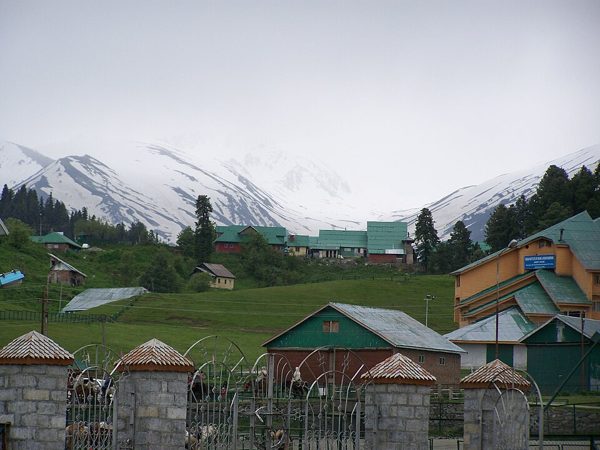
Gulmarg [1] (also known as Gulmarag , [5] lit. 'meadow of flowers' in Kashmiri [6] ) is a hill station and a notified area committee in Baramulla district of the Indian union territory of Jammu and Kashmir. [7] [8] It is located in the Indian-administered part of Kashmir, close to the Line of Control that serves as the de facto border between India and Pakistan. It is in the Pir Panjal Range in the Western Himalayas within the boundaries of the Gulmarg Wildlife Sanctuary. [9] Gulmarg is situated at an altitude of 2,650 m (8,690 ft), and is a popular tourist and skiing destination in the Kas…
Travel destinationsEnglish
Mussoorie
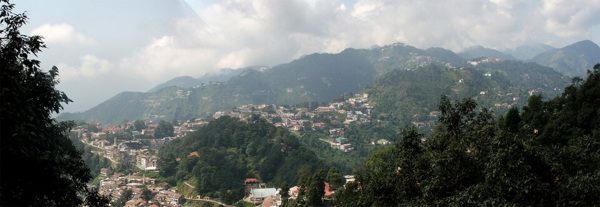
Mussoorie (Garhwali: [məsuːɾiː]) is a hill station and a municipal board in the Dehradun district of the Indian state of Uttarakhand. It is about 26 kilometres (16 mi) from the state Winter capital Dehradun and 289 km (180 mi) north of the national capital of New Delhi. [4] The hill station is in the foothills of the Garhwal Himalayan range. The adjoining town of Landour, which includes a military cantonment, is considered part of "greater Mussoorie", as are the townships Barlowganj and Jharipani. [5]
Travel destinationsEnglish
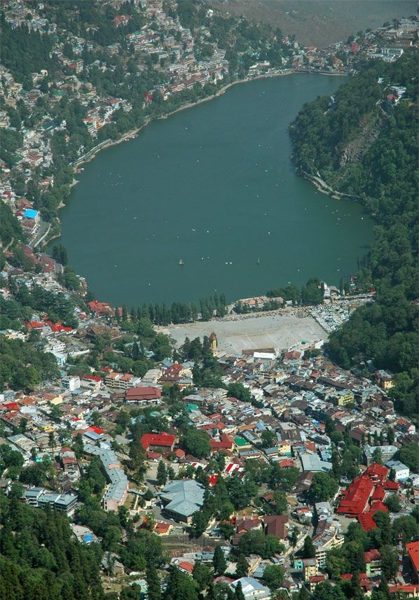
Nainital
Nainital (Kumaoni: Naintāl ; pronounced [nɛnːtaːl]), formerly anglicized as Naini Tal , is a town and headquarters of Nainital district of Kumaon division, Uttarakhand, India. It is the judicial capital of Uttarakhand, the High Court of the state being located there and is the headquarters of an eponymous district. It also houses the Governor of Uttarakhand, [7] who resides in the Raj Bhavan. Nainital was the summer capital [8] of the United Provinces.
Travel destinationsEnglish
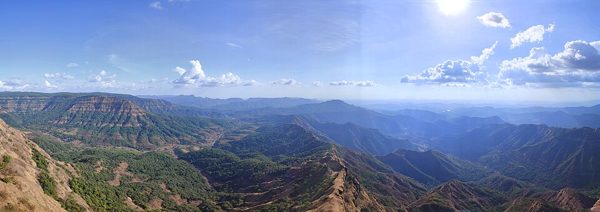
Mahabaleshwar
Mahabaleshwar (pronunciation ⓘ ) is a small town and a municipal council in Satara district, Maharashtra, India. It is a place of pilgrimage because the Krishna River, which considered sacred by Hindus, has its origin here along with five of its tributaries. [1] The British colonial rulers developed the town as a hill station, and it served as the summer capital of the Bombay Presidency during the colonial rule.
Travel destinationsEnglish
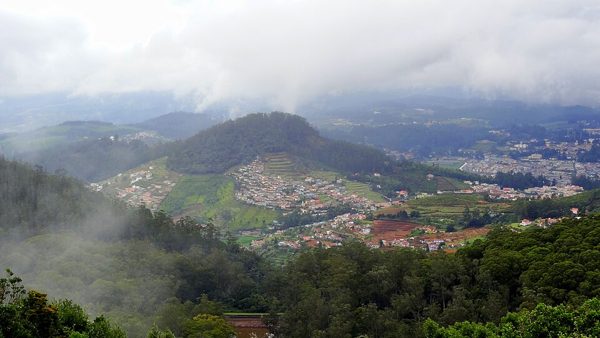
Ooty
Ooty [1] is a town and seat of the Nilgiris district in the Indian state of Tamil Nadu. It is located at an altitude of 2,240 m (7,350 ft), in the Nilgiri Mountains, which forms part of the Western Ghats, and is known by the epithet "Queen of hill stations".
Travel destinationsEnglish
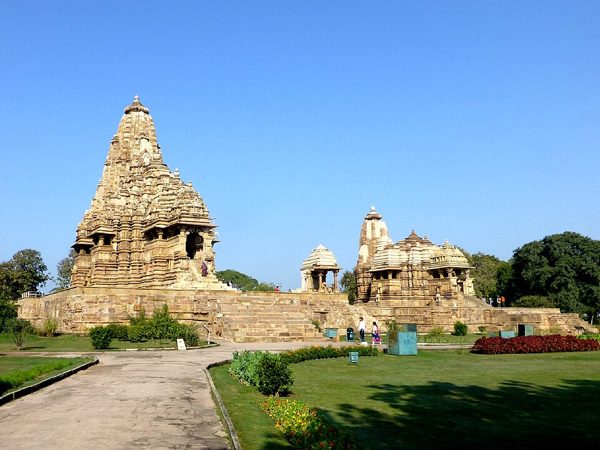
Khajuraho Group of Monuments
The Khajuraho Group of Monuments are a group of Hindu and Digambara Jain temples in Chhatarpur district, Madhya Pradesh, India. They are about 46 km (28.6 mi) from Chhatarpur city, the district headquarters, 283 km (177 mi) from Gwalior, 175 kilometres (109 mi) southeast of Jhansi, 10 kilometres (6.2 mi) from Khajwa and 9 kilometres (5.6 mi) from Rajnagar. The temples are famous for their Nagara-style architectural symbolism and a few erotic sculptures. [1]
Monuments and heritageEnglish