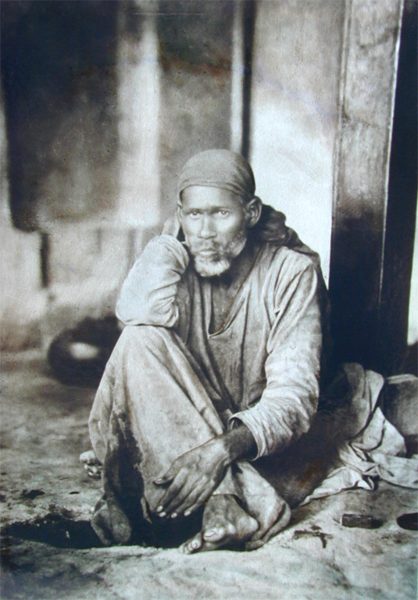
Sai Baba of Shirdi
Sai Baba of Shirdi (c. 1838–15 October 1918), [2] also known as Shirdi Sai Baba , was an Indian spiritual master considered to be a saint, [3] and revered by both Hindu and Muslim devotees during and after his lifetime.
Spirituality and social reformEnglish
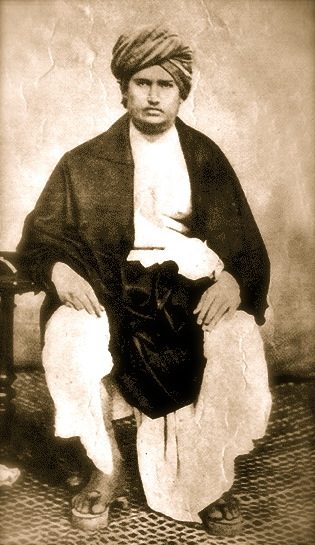
Dayananda Saraswati
There are undoubtedly many learned men among the followers of every religion. They should free themselves from prejudice, accept the universal truths – that is those truths that are to be found alike in all religions and are of universal application, reject all things in which the various religions differ and treat each other lovingly, it will be greatly to the advantage of the world.
Spirituality and social reformEnglish
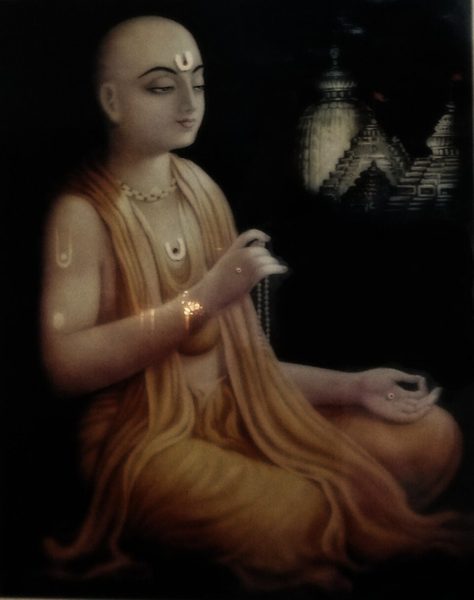
Chaitanya Mahaprabhu
Chaitanya Mahaprabhu (Bengali: মহাপ্রভু শ্রীচৈতন্য দেব; Sanskrit: चैतन्य महाप्रभु, romanized: Caitanya Mahāprabhu ), born Vishvambhara Mishra (IAST: Viśvambhara Miśra [2] ) (18 February 1486 – 14 June 1534 [3] ), was an Indian Hindu saint from Bengal and the founder of Gaudiya Vaishnavism. Chaitanya Mahaprabhu's mode of worshipping Krishna with bhajan-kirtan and dance influenced Vaishnavism in Bengal. He is often considered to be an incarnation of lord Krishna. He is also sometimes considered to be the combined Avatar of goddess Radha and lord Krishna.
Spirituality and social reformEnglish
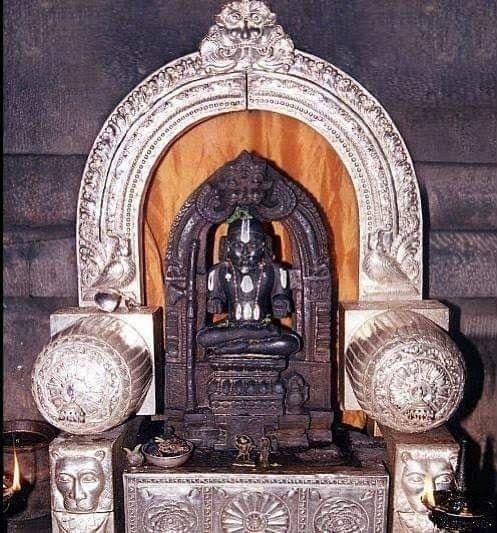
Madhvacharya
Madhvacharya (IAST: Madhvācārya ; pronounced [mɐdʱʋaːˈtɕaːrjɐ]; 1199–1278 CE [5] or 1238–1317 CE [6] ), also known as Purna Prajna (IAST: Pūrṇa-Prajña ) and Ānanda Tīrtha , was an Indian philosopher, theologian and the chief proponent of the Dvaita (dualism) school of Vedanta. [2] [7] Madhva called his philosophy Tattvavāda meaning "arguments from a realist viewpoint". [7] Madhvacharya was born at Pajaka near Udupi on the west coast of Karnataka state in 13th-century India. [8] As a teenager, he became a Sanyasi (monk) joining Brahma-sampradaya guru Achyutapreksha, of the Ekadandi order. [2…
Spirituality and social reformEnglish
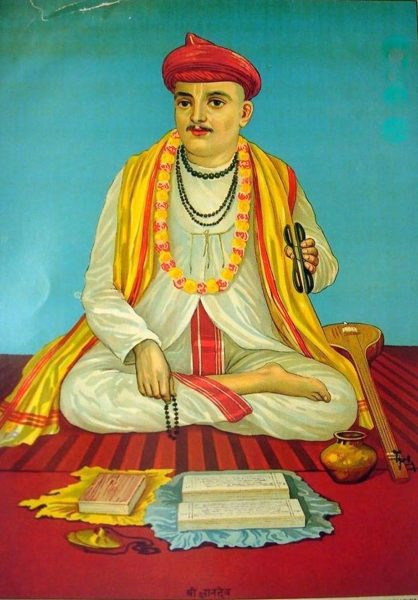
Dnyaneshwar
Sant Dnyaneshwar (Marathi pronunciation: [d̪ɲaːn̪eʃʋəɾ]), (Devanagari : सन्त ज्ञानेश्वर), pronunciation ⓘ also referred to as Jñāneśvara , Jñānadeva , Dnyandev or Mauli or Dnyandev Vitthal Kulkarni (1275–1296 (living samadhi)), [9] [10] was a 13th-century Indian Marathi saint, poet, philosopher and yogi of the Nath and Varkari tradition. In his short life of 21 years, he authored Dnyaneshwari (a commentary on the Bhagavad Gita ) and Amrutanubhav . [11] These are the oldest surviving literary works in the Marathi language, and considered to be milestones in Marathi literature. [12] Sant Dnya…
Spirituality and social reformEnglish
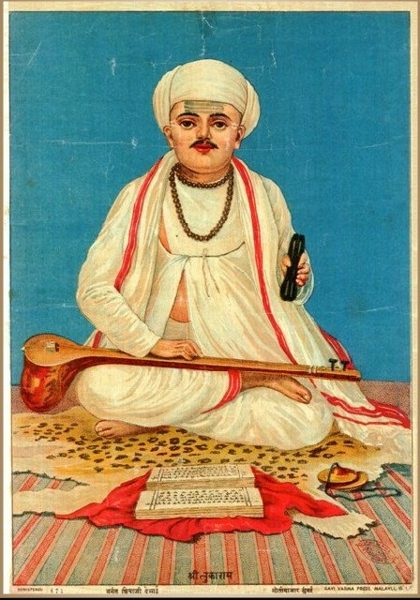
Tukaram
Tukaram (Marathi pronunciation: [t̪ukaːɾam]), also known as Tuka, Tukobaraya, and Tukoba , was a Hindu Marathi saint of the Varkari Sampradaya who lived in the 17th century. [4] [5] He was a devotee of the god Vithoba, a form of Vishnu. [3] He is best known for his devotional poetry called abhanga , which is popular in Maharashtra. Many of his poems [6] deal with social reform. [5]
Spirituality and social reformEnglish
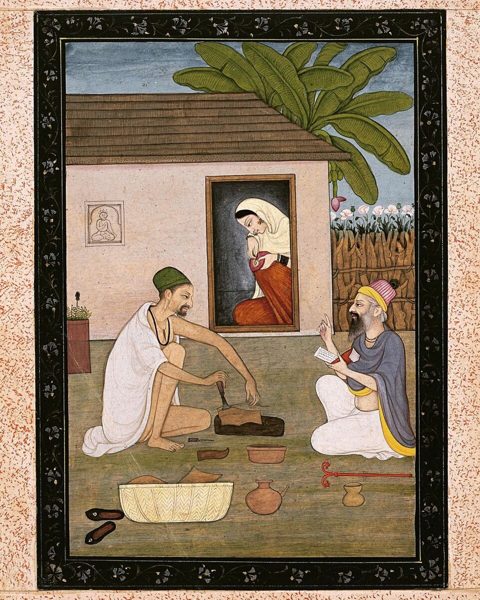
Ravidas
Ravidas or Raidas was an Indian mystic poet-saint of the Bhakti movement during the 15th to 16th century CE. [1] [2] Venerated as a guru (spiritual teacher) in the modern regions of Uttar Pradesh, Bihar, Rajasthan, Gujarat, Maharashtra, Madhya Pradesh, Punjab, and Haryana, he was a poet, social reformer and spiritual figure.
Spirituality and social reformEnglish
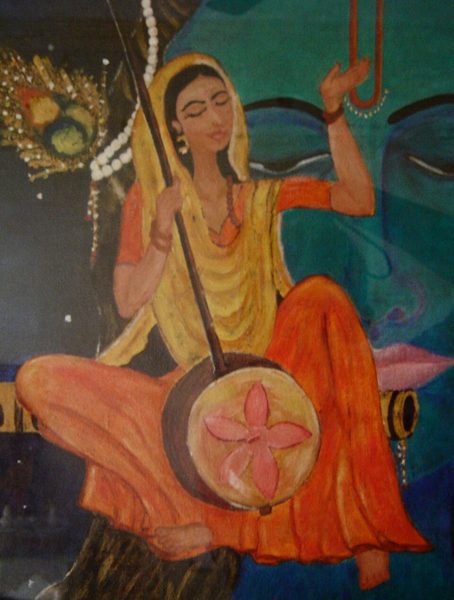
Mirabai
Meera , better known as Mirabai , [2] and venerated as Sant Meerabai , was a 16th-century Hindu mystic poet and devotee of Krishna. She is a celebrated Bhakti saint, particularly in the North Indian Hindu tradition. [3] [4] [5] She is mentioned in Bhaktamal , confirming that she was widely known and a cherished figure in the Bhakti movement by about 1600. [6] [7] In her poems, she expressed the madhurya bhava towards Krishna.
Spirituality and social reformEnglish
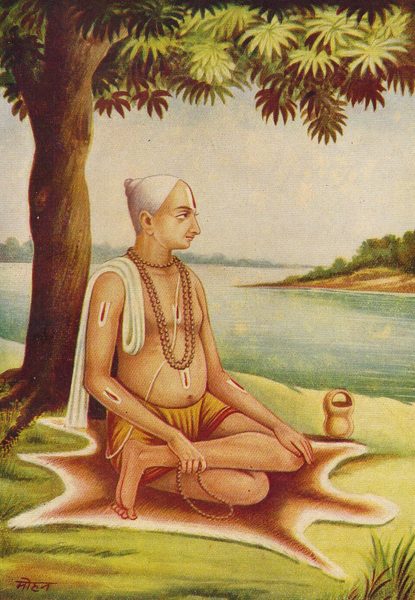
Tulsidas
Rambola Dubey (Hindi pronunciation: [rɑːməboːlɑː d̪ubeː]; 11 August 1511 – 30 July 1623 [1] ), popularly known as Goswami Tulsīdās (Sanskrit pronunciation: [tʊlsiːdaːsa]), [2] was a Vaishnava (Ramanandi) Hindu saint, devotee (भक्त) and poet, renowned for his devotion to the deity Rama. He wrote several popular works in Sanskrit, Awadhi, and Braj Bhasha, but is best known as the author of the Hanuman Chalisa and of the epic Ramcharitmanas , a retelling of the Sanskrit Ramayana , based on Rama's life, in the vernacular Awadhi language.
Spirituality and social reformEnglish
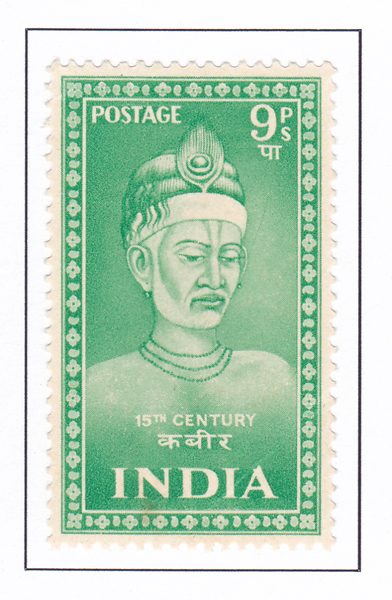
Kabir
Kabir (fl. 15th century) [1] : 14–15 was a famous Indian devotional mystic poet and saint. His writings influenced Hinduism's Bhakti movement, and his verses are found in Sikhism's scripture Guru Granth Sahib, the Satguru Granth Sahib of Saint Garib Das, [2] and Kabir Sagar of Dharamdas. [3] [4] [5] Today, Kabir is an important personality in Hinduism, Sikhism and in Sufism. [6] He was a disciple of Ramananda, the founder of the Ramanandi Sampradaya.
Spirituality and social reformEnglish
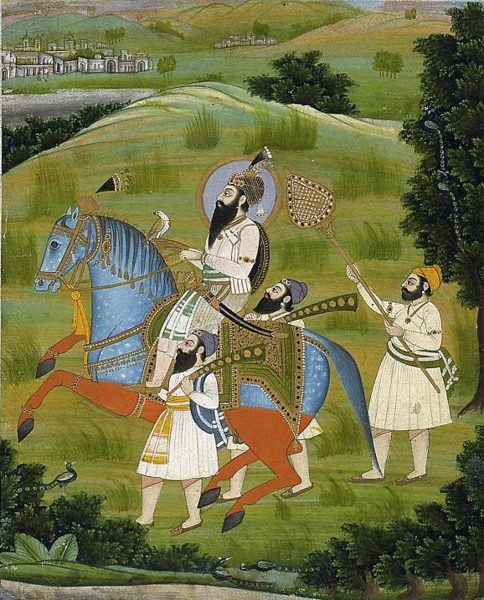
Guru Gobind Singh
Guru Gobind Singh (Punjabi pronunciation: [gʊɾuː goːbɪn̪d̪ᵊ sɪ́ŋgᵊ]; born Gobind Das ; [1] 22 December 1666 – 7 October 1708) [2] [5] [24] was the tenth and last human Sikh Guru. [25] [3] He was a warrior, poet, and philosopher. In 1675, at the age of nine, he was formally made the leader of the Sikhs after his father Guru Tegh Bahadur—the ninth Sikh Guru—was executed by the emperor Aurangzeb. [25] [4] His four biological sons died during his lifetime—two in battle and two executed by the Mughal administrator Wazir Khan. [31] [32] [33]
Spirituality and social reformEnglish
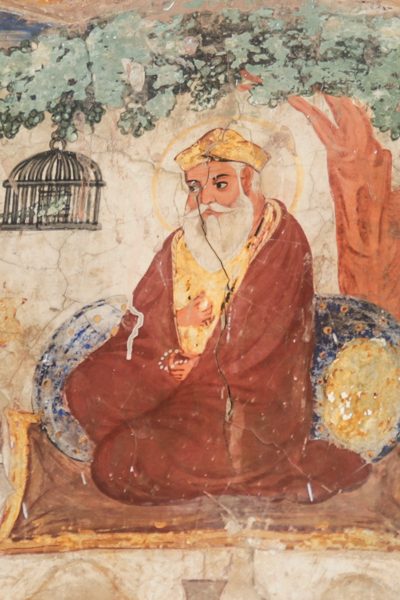
Guru Nanak
Gurū Nānak (15 April 1469 – 22 September 1539; Gurmukhi: ਗੁਰੂ ਨਾਨਕ [1] ), also known as Bābā Nānak (Father Nanak), [22] was an Indian spiritual teacher, mystic and poet, who is regarded as the founder of Sikhism and is the first of the ten Sikh gurus.
Spirituality and social reformEnglish
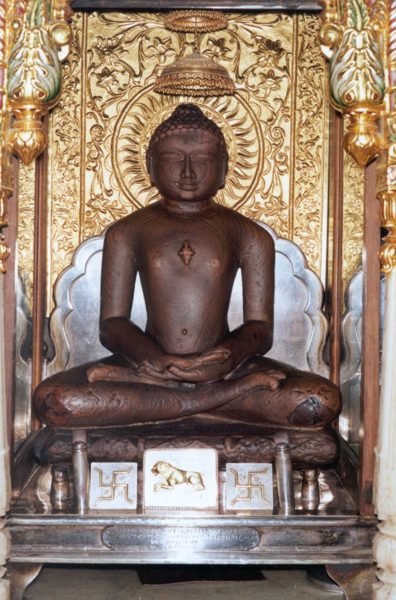
Mahavira
Mahavira ( Mahāvīra ), also known by his birth name Vardhamana ( Vardhamāna ), was an Indian religious reformer and spiritual leader, considered by Jains to be the 24th and final Tirthankara (Supreme Preacher) in the current time cycle of Jain cosmology. He is believed by historians to have lived in the 6th or 5th century BCE, [32] [17] [1] reviving and reforming an earlier Jain or proto-Jain community [3] which had likely been led by Pārśvanātha, whom Jains consider to be Mahavira's predecessor. [33] [34] [35] Although the dates of Mahavira's life are uncertain and historically reliable in…
Spirituality and social reformEnglish
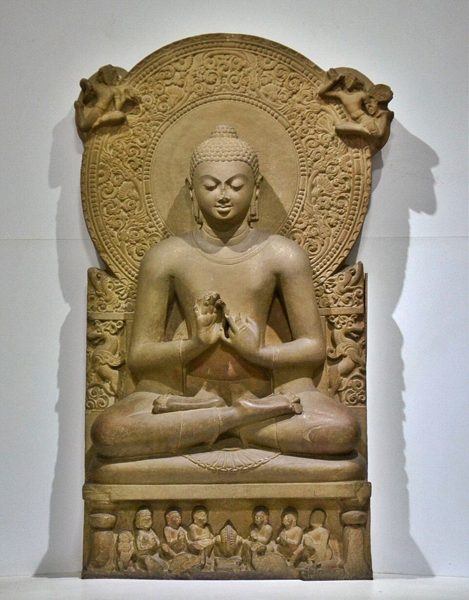
The Buddha
Siddhartha Gautama , [5] most commonly referred to as the Buddha (lit. 'the awakened one'), [50] [6] [7] was a wandering religious teacher who lived in the eastern Indo-Gangetic Plains during the 6th or 5th century BCE [51] [52] [53] [2] and founded Buddhism. According to Buddhist legends, he was born in Lumbini, in what is now Nepal, [3] to royal parents of the Shakya clan, but renounced his home life to live as a wandering ascetic. [54] [8] After leading a life of mendicancy, asceticism, and meditation, he attained nirvana at Bodh Gaya in what is now Bihar, India. The Buddha then wandered…
Spirituality and social reformEnglish
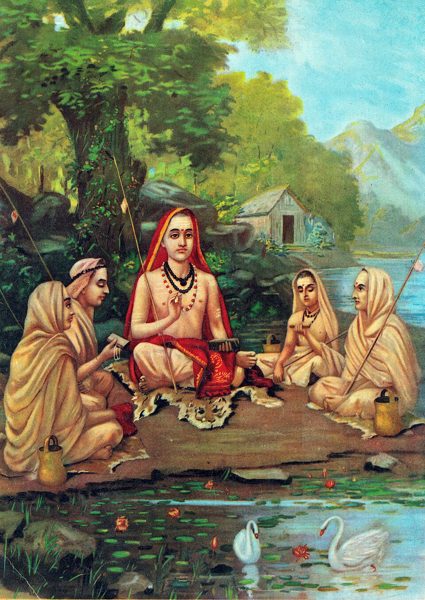
Adi Shankara
Adi Shankara (8th c. CE), [1] also called Adi Shankaracharya (Sanskrit: आदि शङ्कर, आदि शङ्कराचार्य, romanized: Ādi Śaṅkara, Ādi Śaṅkarācārya , lit. 'First Shankara', [2] pronounced [aːd̪i ɕɐŋkɐraːt͡ɕaːrjɐ]), [3] was an Indian Vedic scholar-monk, philosopher, and teacher ( acharya ) of Advaita Vedanta. [44] He wrote influential commentaries on the Brahma sutras and other texts, and in recent times is often revered as the most important Indian philosopher. [45] Reliable information on Shankara's actual life is scant, [46] and the historical influence of his works on Hindu intellectual thought…
Spirituality and social reformEnglish
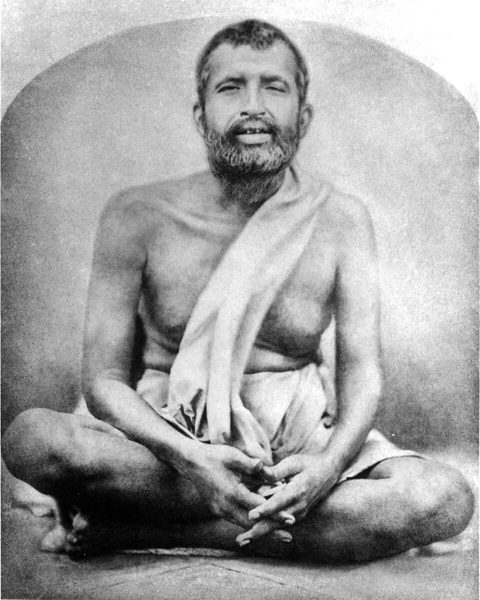
Ramakrishna
Ramakrishna (18 February 1836 – 16 August 1886 [9] ), also called Ramakrishna Paramahamsa (pronounced [ramɔkriʂno pɔromoɦɔŋʃo] ⓘ ; IAST: Rāmakṛṣṇa Paramahaṃsa ), born Ramakrishna Chattopadhyay (his childhood nickname was Gadadhar ), [10] [11] [12] was an Indian Hindu mystic. He was a devotee of the goddess Kali, but adhered to various religious practices from the Hindu traditions of Vaishnavism, Tantric Shaktism, and Advaita Vedanta, as well as Christianity and Sufi Islam. His parable-based teachings advocated the essential unity of religions and proclaimed that world religions are "so many…
Spirituality and social reformEnglish
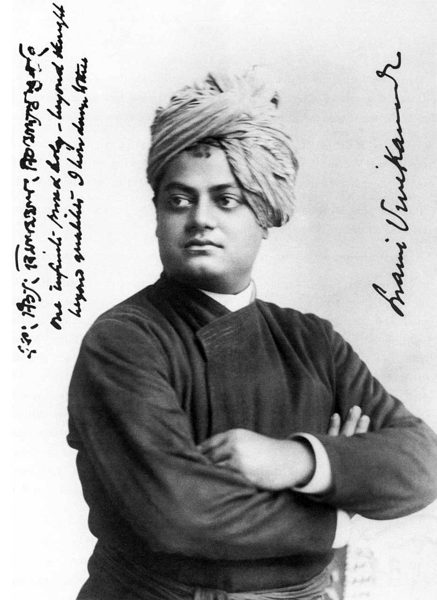
Swami Vivekananda
"Arise, awake, and stop not till the goal is reached" ( more on Wikiquote)
Spirituality and social reformEnglish