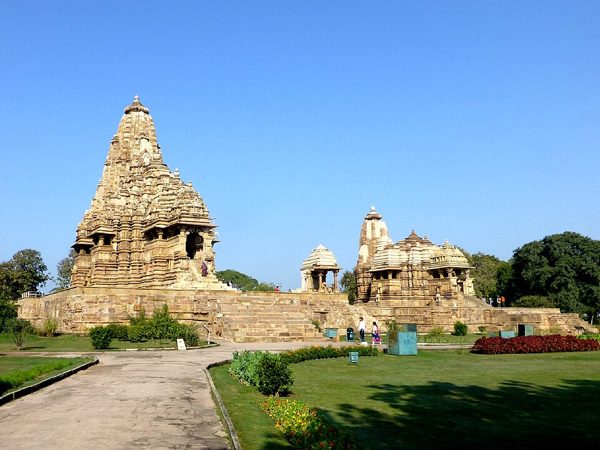
Khajuraho Group of Monuments
The Khajuraho Group of Monuments are a group of Hindu and Digambara Jain temples in Chhatarpur district, Madhya Pradesh, India. They are about 46 km (28.6 mi) from Chhatarpur city, the district headquarters, 283 km (177 mi) from Gwalior, 175 kilometres (109 mi) southeast of Jhansi, 10 kilometres (6.2 mi) from Khajwa and 9 kilometres (5.6 mi) from Rajnagar. The temples are famous for their Nagara-style architectural symbolism and a few erotic sculptures. [1]
Monuments and heritageEnglish
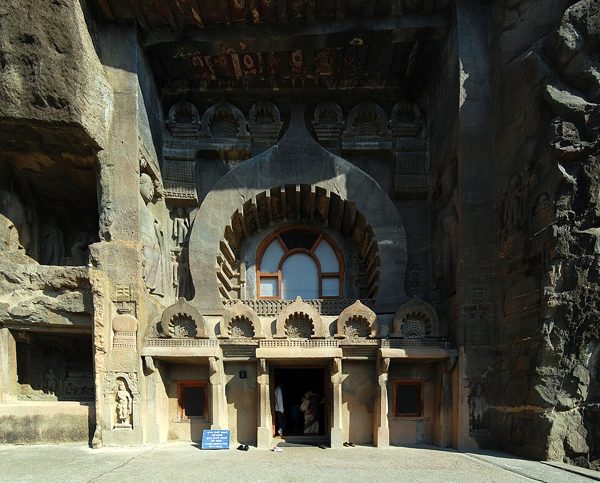
Ajanta Caves
The Ajanta Caves are 30 rock-cut Buddhist cave monuments dating from the second century BCE to about 480 CE in Aurangabad district of Maharashtra state in India. [8] [9] [10] Ajanta Caves are a UNESCO World Heritage Site. [9] Universally regarded as masterpieces of Buddhist religious art, the caves include paintings and rock-cut sculptures, described as among the finest surviving examples of ancient Indian art, particularly expressive paintings that present emotions through gesture, pose and form. [11] [12] [13]
Monuments and heritageEnglish
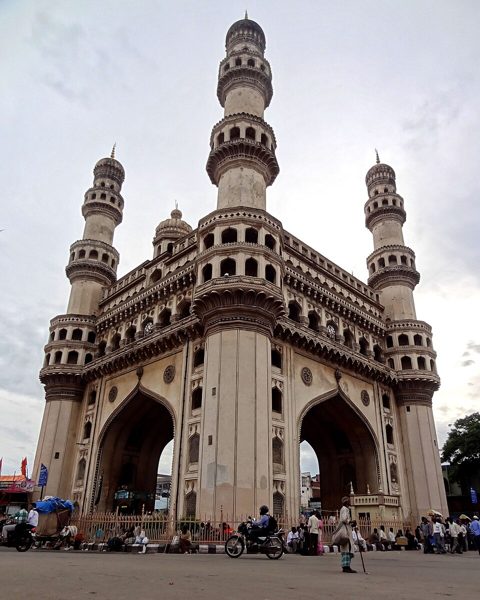
Charminar
The Charminar (lit. 'four minarets') is a monument located in Hyderabad, Telangana, India. Constructed in 1591, the landmark is a symbol of Hyderabad and officially incorporated in the emblem of Telangana. [3] It remained the tallest structure in Hyderabad for 396 years until 1987. The Charminar's long history includes the existence of a mosque on its top floor for more than 435 years. While both historically and religiously significant, it is also known for its popular and busy local markets surrounding the structure, and has become one of the most frequented tourist attractions in Hyderab…
Monuments and heritageEnglish
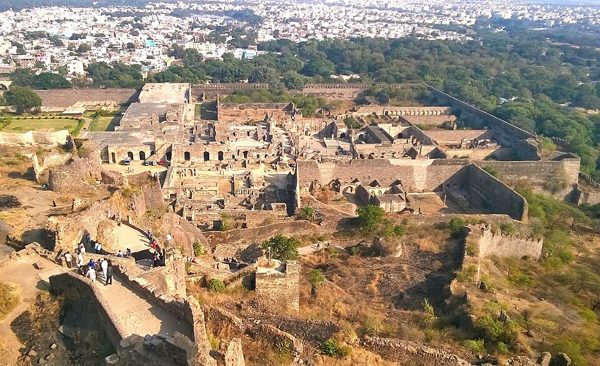
Golconda
Golconda or Muhammadnagar [1] is a fortified citadel and ruined city located on the western outskirts of Hyderabad, Telangana, India. [2] [3] The fort was initially built by Kakatiya ruler Pratāparudra in the 11th century out of mud walls, and was expanded into the current stone citadel by the Qutb Shahs. [4] It was ceded to the Bahmani Kings (before it fragmented into 5 other kingdoms known as the "Deccan Sultanates") from Musunuri Nayakas during the reign of Bahmani Sultan Mohammed Shah I, during the first Bahmani–Vijayanagara War. Following the death of Sultan Mahmood Shah, the Sultanate…
Monuments and heritageEnglish
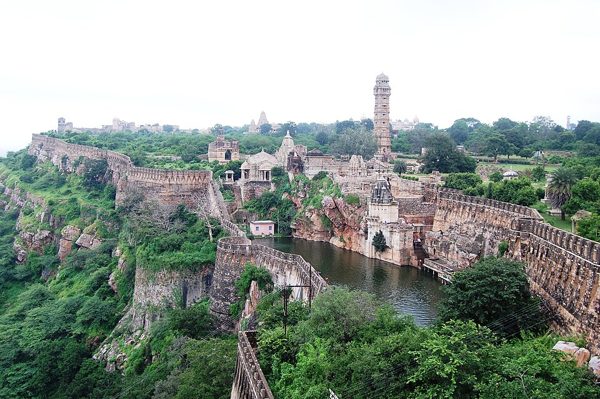
Chittor Fort
Chittor Fort (the literal translation of the Hindi Chittorgarh ), also known as Chittod Fort , is one of the largest forts in India. It is a UNESCO World Heritage Site. The fort was the capital of Mewar and is located in the present-day city of Chittorgarh. It sprawls over a hill 180 m (590.6 ft) in height, spread over an area of 280 ha (691.9 acres) above the plains of the valley drained by the Berach River. The fort covers 65 historic structures, which include four palaces, 19 large temples, 20 large water bodies, 4 memorials, and a few victory towers.
Monuments and heritageEnglish
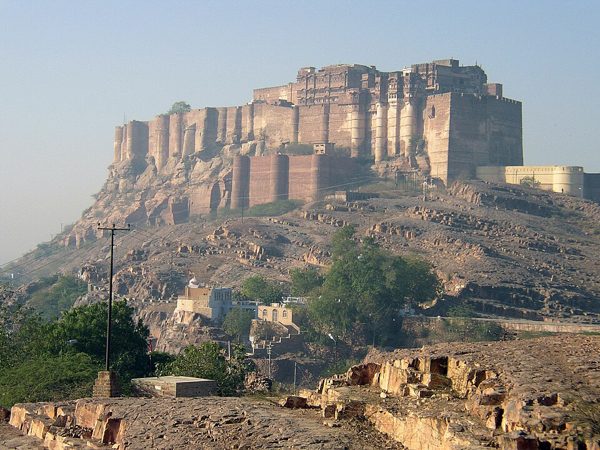
Mehrangarh
Mehrangarh is a historic fort located in Jodhpur, Rajasthan, India. It stands on a hilltop, rising about 122 m (400 ft) above the surrounding plains, [1] and the complex spans 1,200 acres (486 hectares). It was initially built around 1459 by the Rajput ruler of Rathore clan Rao Jodha, [2] though most of the existing structure is from the 17th century built by his successors. [3] The fort has seven gates, including the main entrance, Jai Pol (meaning 'victory gate'), built by Maharaja Man Singh to commemorate his victories over the Jaipur and Bikaner armies in 1806. The Fattehpol (lit. 'vict…
Monuments and heritageEnglish
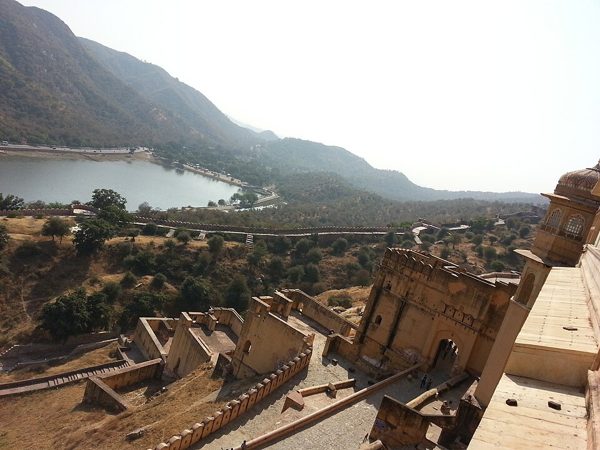
Amber Fort
Amer Fort or Amber Fort is a fort located in Amer, Rajasthan, India. Amer is a town with an area of 4 square kilometres (1.5 sq mi) [2] located 11 kilometres (6.8 mi) from Jaipur, the capital of Rajasthan. Located high on a hill, it is the principal tourist attraction in Jaipur. [3] [4] Amer Fort is known for its artistic style elements. With its large ramparts and series of gates and cobbled paths, the fort overlooks Maota Lake, [4] [5] [6] [7] which is the main source of water for the Amer Palace.
Monuments and heritageEnglish
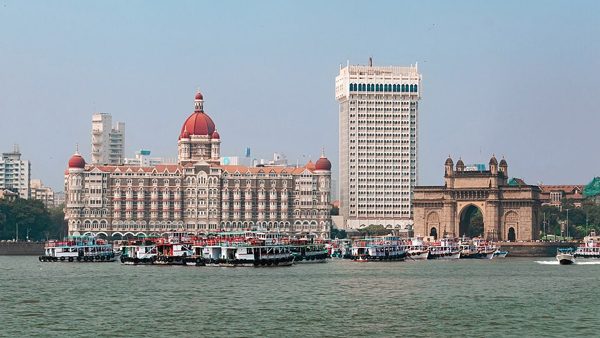
Gateway of India
The Gateway of India is an arch-monument, completed in 1924, on the waterfront of Mumbai, Maharashtra, India. It was erected to commemorate the landing of King George V of the United Kingdom for his coronation as the Emperor of India in December 1911 at Strand Road near Wellington Fountain. He was the first British monarch to visit India.
Monuments and heritageEnglish
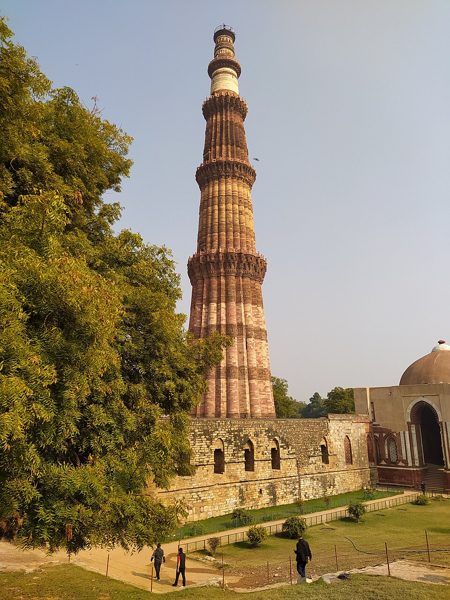
Qutb Minar
The Qutb Minar , also spelled Qutub Minar and Qutab Minar , is a minaret and victory tower, built during the Delhi sultanate, and comprising the Qutb complex, a UNESCO World Heritage Site in Mehrauli, South Delhi, India. [3] [4] It was mostly built between 1199 and 1220, contains 399 steps, and is one of the most frequented heritage spots in the city. [5] [6] [3] After defeating Prithviraj Chauhan, the last Hindu ruler of Delhi before the Ghurid conquest of the region, [7] [8] Qutab-ud-din Aibak initiated the construction of the victory tower, but only managed to finish the first level. It …
Monuments and heritageEnglish
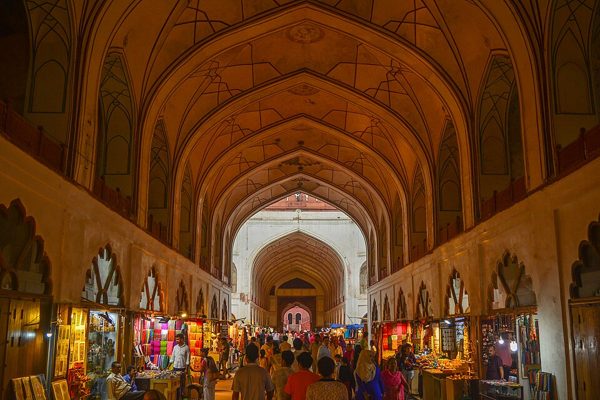
Red Fort
The Red Fort ( Lal Qila in Hindi; Hindi pronunciation: [laːl 'qɪlaː]) is a historic Mughal fort located in the Old Delhi area of Delhi, India. Serving as the main residence of the Mughal emperors, it was commissioned by Emperor Shah Jahan on the 12th of May 1639; the fort was constructed following his decision to shift the Mughal capital from Agra to Delhi. Originally adorned in red and white, the fort's design is attributed to Ustad Ahmad Lahori, the architect of the Taj Mahal. The Red Fort is a prominent example of Mughal architecture from Shah Jahan's reign, combining Persian and Indian …
Monuments and heritageEnglish
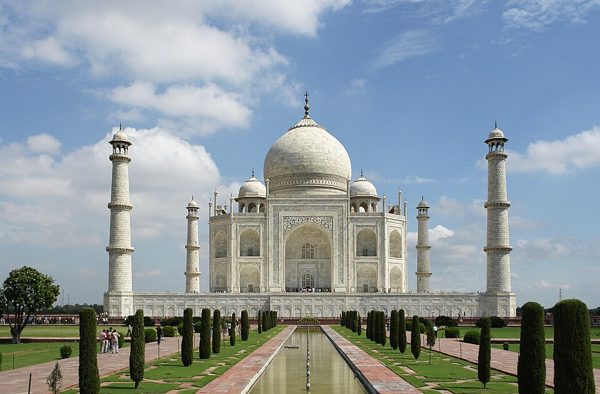
Taj Mahal
The Taj Mahal (/ˌtɑːdʒ məˈhɑːl, ˌtɑːʒ -/ TAHJ mə-HAHL, TAHZH - ; Hindustani: [t̪ɑːd͡ʒ ˈmɛɦ(ɛ)l]; lit. 'Crown of the Palace') is an ivory-white marble mausoleum on the right bank of the river Yamuna in Agra, Uttar Pradesh, India. It was commissioned in 1631 by the fifth Mughal emperor, Shah Jahan (r. 1628–1658), to house the tomb of his late wife, Mumtaz Mahal; it also houses the tomb of Shah Jahan himself. The tomb is the centrepiece of a 17-hectare (42-acre) complex, which includes a mosque and a guest house, and is set in formal gardens bounded on three sides by a crenellated wall.
Monuments and heritageEnglish