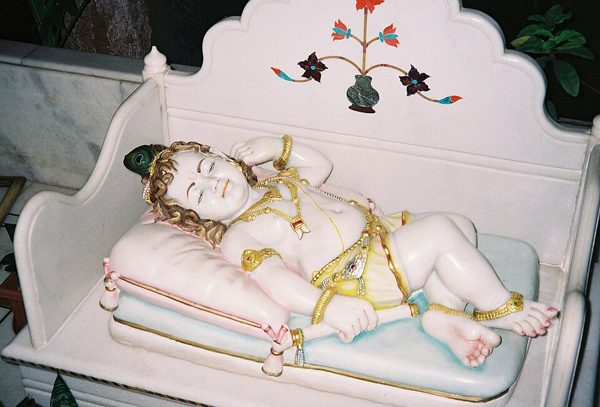
Krishna Janmashtami
Krishna Janmashtami (Sanskrit: कृष्णजन्माष्टमी, romanized: Kṛṣṇajanmāṣṭamī ), also known as Krishnashtami , Janmashtami , or Gokulashtami , is an annual Hindu festival that celebrates the birth of Krishna, the eighth avatar of Vishnu. In prominent Hindu scriptures, such as the Mahabharata , Bhagavata Purana and Gita Govinda , Krishna has been identified as the supreme God and the source of all avatars. [5] Krishna's birth is celebrated on the eighth day (Ashtami) of the dark fortnight (Krishna Paksha) in Shravana Masa (according to the amanta tradition) or Bhadrapada Masa (according to the …
Festivals and eventsEnglish
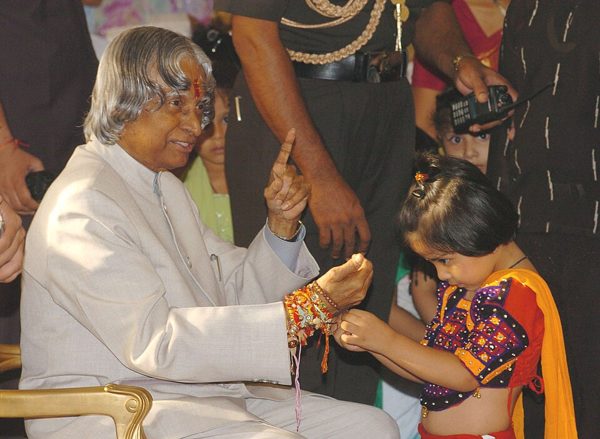
Raksha Bandhan
"Mayer's (1960: 219) observation for central India would not be inaccurate for most communities in the subcontinent:
Festivals and eventsEnglish
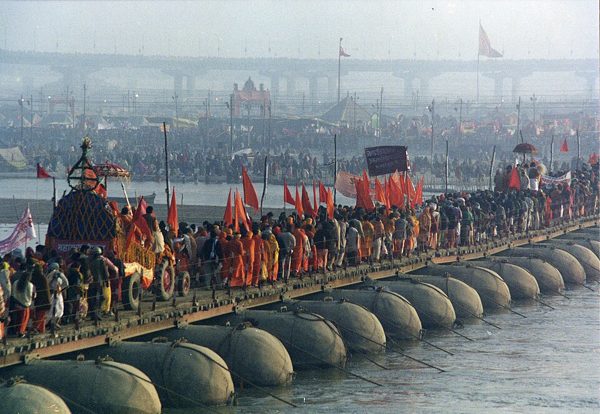
Kumbh Mela
Kumbh Mela (Sanskrit: Kumbha Mēlā , pronounced [kʊˈmbʱᵊ melaː]; lit. 'festival of the Sacred Pitcher' [15] ) is a Hindu pilgrimage, celebrated every four or twelve years, correlated with the partial or full revolution of Jupiter. These are held at four locations–Prayagraj, Haridwar, Nashik, and Ujjain– at varying time intervals. According to the Puranas , these sites are believed to have received drops of the divine nectar ( amrita ) during the Samudra Manthana (churning of the ocean of milk). [16] [17] [18] The Kumbh Mela lasts between one and three months, [19] [20] with the Amavasya day …
Festivals and eventsEnglish
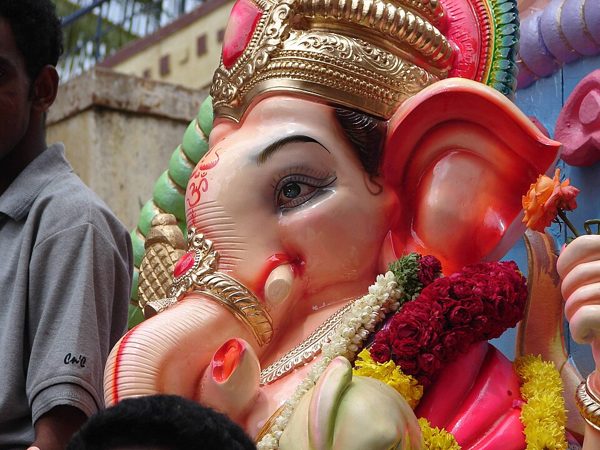
Ganesh Chaturthi
Ganesh Chaturthi (ISO: Gaṇeśa Caturthī ) (transl. Festival of Ganesha on the Fourth Day ), also known as Vinayaka Chavithi ( Vināyaka Cavithī ), or Vinayagar Chaturthi ( Vināyagar Caturthī ), is a Hindu festival celebrating the arrival of the Hindu deity Ganesha to the south of India to meet his brother Karthikeya. [3] The festival is marked with the installation of Ganesha's murtis (devotional representations of a deity), privately in homes and publicly on elaborate pandals (temporary stages). Observances include chanting of Vedic hymns and Hindu texts, such as prayers and vrata (fasting).…
Festivals and eventsEnglish
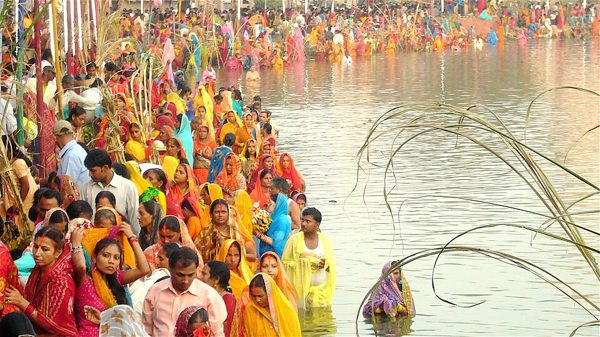
Chhath
Chhath , also called Chhath Puja , is an ancient Hindu festival native to East India and southern Nepal. [1] It is celebrated [2] primarily in the Indian state of Bihar, Jharkhand, and eastern Uttar Pradesh; [3] [4] and Koshi, Gandaki, Bagmati, Lumbini, and Madhesh provinces of Nepal. [5] [6] [7] [8] In major urban centres like Delhi, Mumbai, Kolkata, Janakpur, and Kathmandu, the diaspora celebrates Chhath to preserve their cultural heritage. [9] [10] [11] [12] The festival is also celebrated by the diaspora [13] [14] in countries such as the United States, Australia, Singapore, Malaysia, t…
Festivals and eventsEnglish
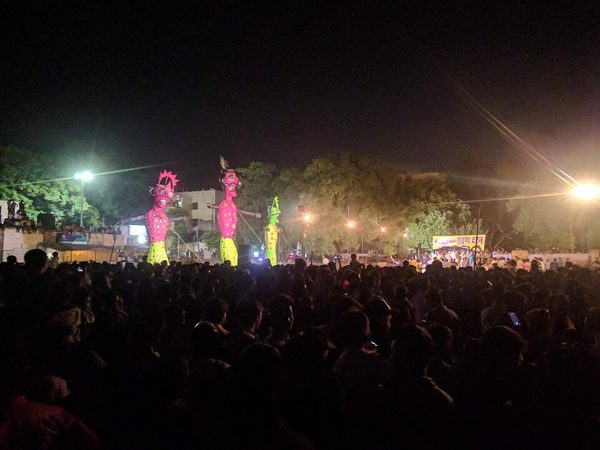
Vijayadashami
Vijayadashami (Sanskrit: विजयादशमी, romanized: Vijayādaśamī , lit. 'Tenth day of victory'), more commonly known as Dasara , or Dassahra , or Dussehra , [1] and also known as Dashāhra or Dashain in Nepali, is a major Hindu festival celebrated every year at the end of Durga Puja and Navaratri. It is observed on the tenth day of the waxing moon (Shukla Paksha) in the month of Ashvin, the seventh in the Hindu lunisolar calendar, and falls in the Gregorian calendar months of September or October. [4] [5] [6]
Festivals and eventsEnglish
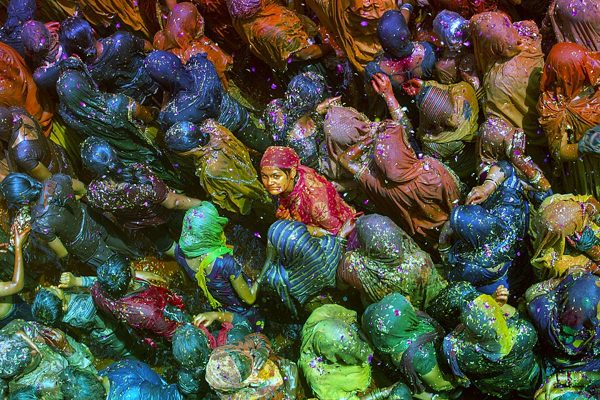
Holi
Holi (IPA: ['hoːli:, hoːɭiː]) is a major Hindu festival [7] [8] of colours, love and spring. [2] [9] [10] [11] It celebrates the love between the deities Radha and Krishna. [12] [13] Additionally, the day signifies the triumph of good over evil, [14] [15] as it commemorates the victory of Vishnu as Narasimha over Hiranyakashipu. [16] [17] Holi originated in ancient Indian subcontinent and is predominantly celebrated in the Indian subcontinent, but has also spread to other regions of Asia and parts of the Western world. [10] [18] [19]
Festivals and eventsEnglish
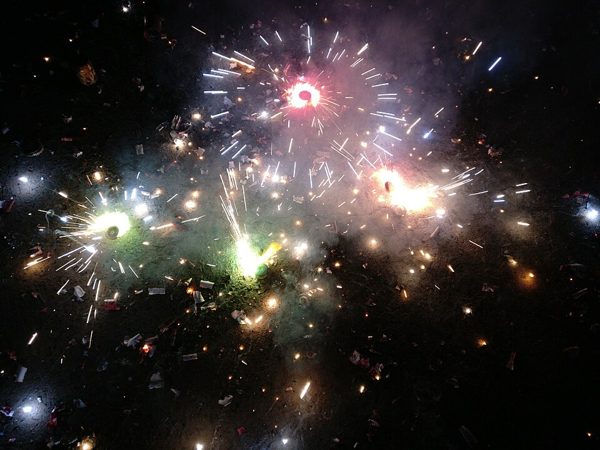
Diwali
Dipavali (IAST: Dīpāvalī ), [1] commonly known as Diwali (/dɪˈwɑːliː/), [26] is the Hindu festival of lights, with variations celebrated in other Indian religions such as Jainism and Sikhism. [2] It is associated with the spiritual victory or triumph of Dharma over Adharma , light over darkness, good over evil, and knowledge over ignorance. [27] [28] [29] [30] Diwali is celebrated during the Hindu lunisolar months of Ashvin (according to the amanta tradition) and Kārtika – between around mid-October and mid-November. [36] The celebrations generally last five or six days. [37] [38]
Festivals and eventsEnglish